

Between the Sacred and Profane: Making Distinctive Spaces for Learning
The Classroom Doesn't Feel Special. We Should Change That.

Welcome to the Wisdom in the Machine Age Substack. I’m Lily Abadal, a philosopher and educator exploring wisdom, virtue, and formation in an age shaped by AI, convenience, and speed. If you are looking for nuance around AI in higher education, pedagogical tools and strategies for genuine learning, and/or are partial to Aristotle and Aquinas, welcome.
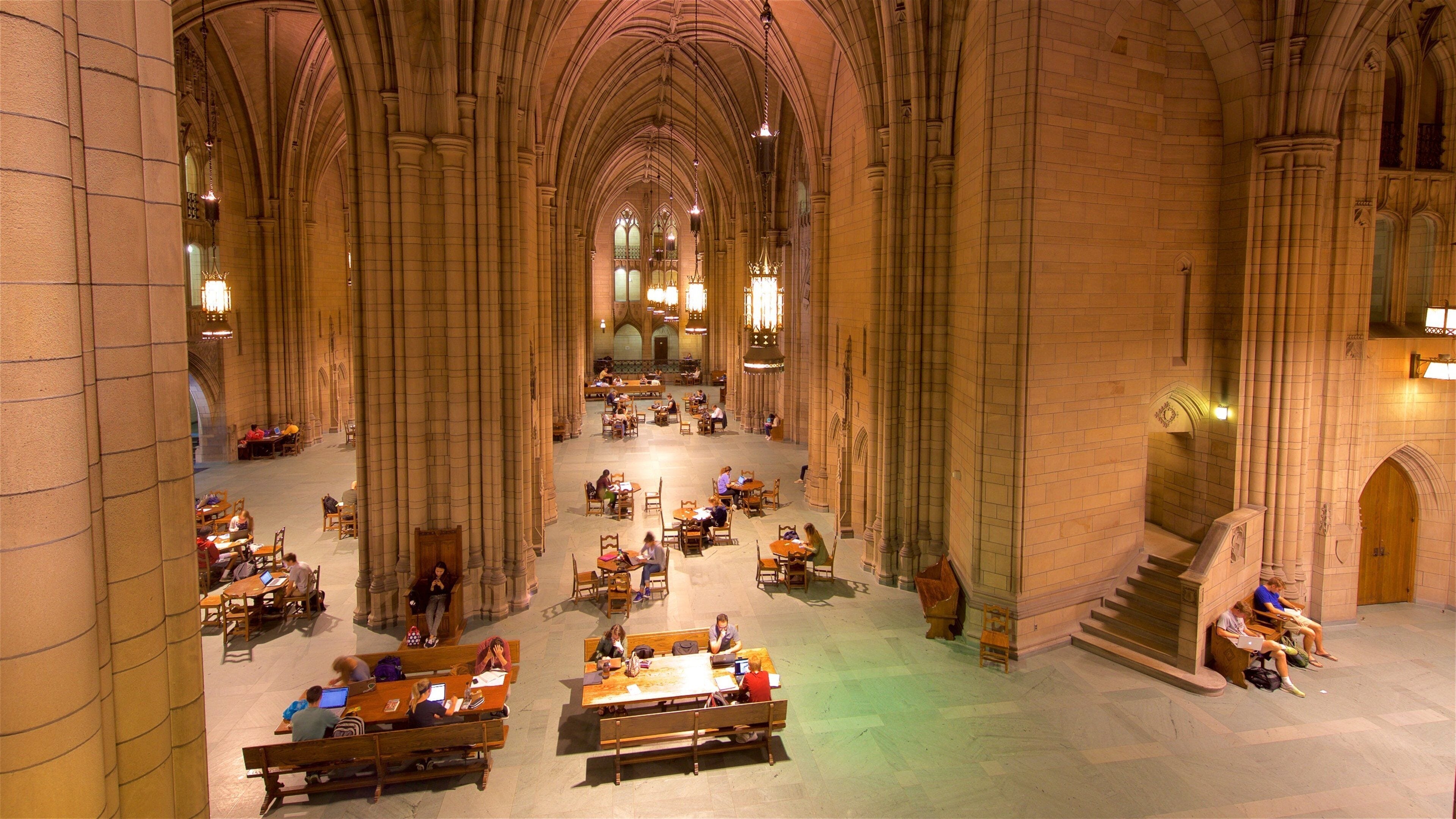
Everyone knows you don’t take your phone out in church. No one has to post rules about this anywhere. No one is walking around and waving their fingers at the tweens that can’t keep their eyes off their screens (Okay, maybe their moms once in a while). Though there is no obvious policing, it’s just about the only place I go every week where no one is glued to their devices. There are no laptops or AirPods. No one is rushing to the front of the church to stream the homily for a reel. A few have tried and they have been relentlessly shamed in the comment sections of their Instagram posts.
I suspect the reason for this is that we have this collective understanding: the one hour on Sundays spent in church is sacred to those making the effort to get there. This time spent in this place is distinct and set apart from the banal and ordinary occurrences of our modern lives—what theologians call “the profane.” We want it to be that way. We want a respite from the scrolling and clicking and multitasking of modernity.
However, it is worth thinking about what makes the space feel sacred. In other words, what makes it obvious to the people entering this space that something special is going on—that there is something here we need to protect from the screens, feeds, pings, and rings. I think reflecting on this will bring some interesting clarity about what has gone awry in the university classroom: no one is communicating that something special is going on there. Learning is nothing more than an extension of the profane—a profane space that is increasingly technocratic and utilitarian.
The idea I’m reaching for in this essay is that in this age where our ordinary lives are so saturated with machines that make it difficult to be present for genuine encounter, we need to create learning spaces distinctive enough to feel special—not quite sacred, but most certainly not profane. This was a feature of the very first universities—outgrowths of monasteries set apart from the hustle and bustle of the world. Indeed, we can learn quite a bit about how to recapture this from religion.
The Point of Pageantry
My church on Sunday is called Mass—and it starts quite dramatically. There is a grand entrance with the preist. The lectionary is held high above our heads and slow-marched to the altar by a deacon or lector. There is a grand declaration about why we are there, one repeated each time all are gathered together. Everyone present calls to mind how they have fallen short that week and literally beats their chests while uttering a “mea culpa”—my fault, my fault, my most grievous fault.
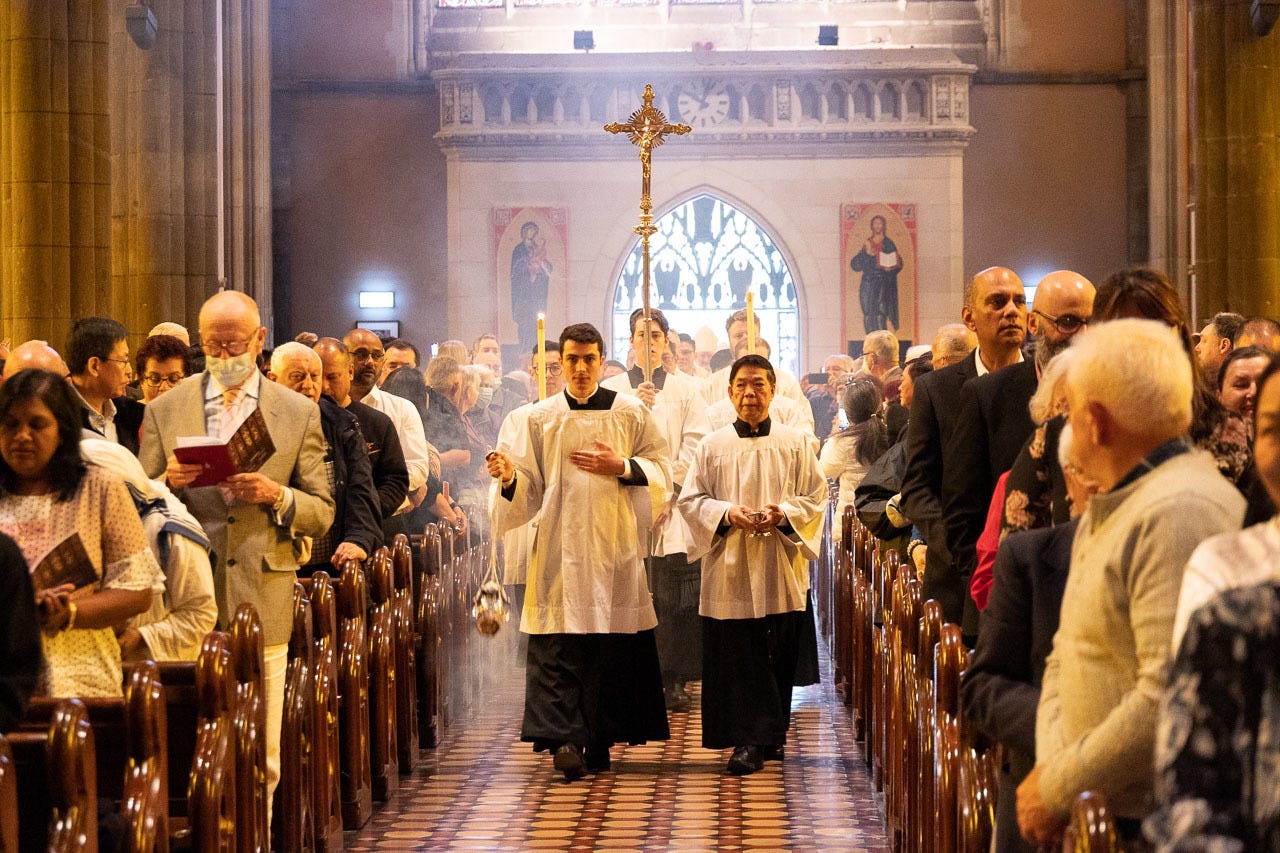
There is a lot of valuable advice here about how to communicate distinctiveness without ever saying “this space is distinctive” (Try not to focus narrowly on centering Catholic guilt). The entrance clearly signals the start of something—a clear shift that serves as a transition from the banal. That book we read from is covered in literal gold paint. It’s larger than the largest textbook you’ll ever see. The size and aesthetic tell all those looking, “this is important.” The framing orients all present in a specific way, bringing awareness to why this time is needed, what it is we are about to do. Everyone stands during all this to signal reverence but also to make people alert. All of this only in the first five minutes. There is a point to the ritual and pageantry—it aims towards purpose.
Contrast this to your classroom. Students move seamlessly from hallways to their seats without missing a TikTok beat. To bring up the assigned reading they simply move the tab on their screen and can shamelessly toggle between Reddit feeds and Plato. Often we signal class is now beginning with a formal announcement to this effect that is coupled with a Powerpoint slide emanating a familiar blue light. Many students even keep one AirPod in to keep the vibes going. What vibes? I don’t know. We ease into discussion tepidly while students are hunched over their phones or slouched in chairs. How is this different from the couch? A casual meeting with an acquaintance one has no interest in getting to know?
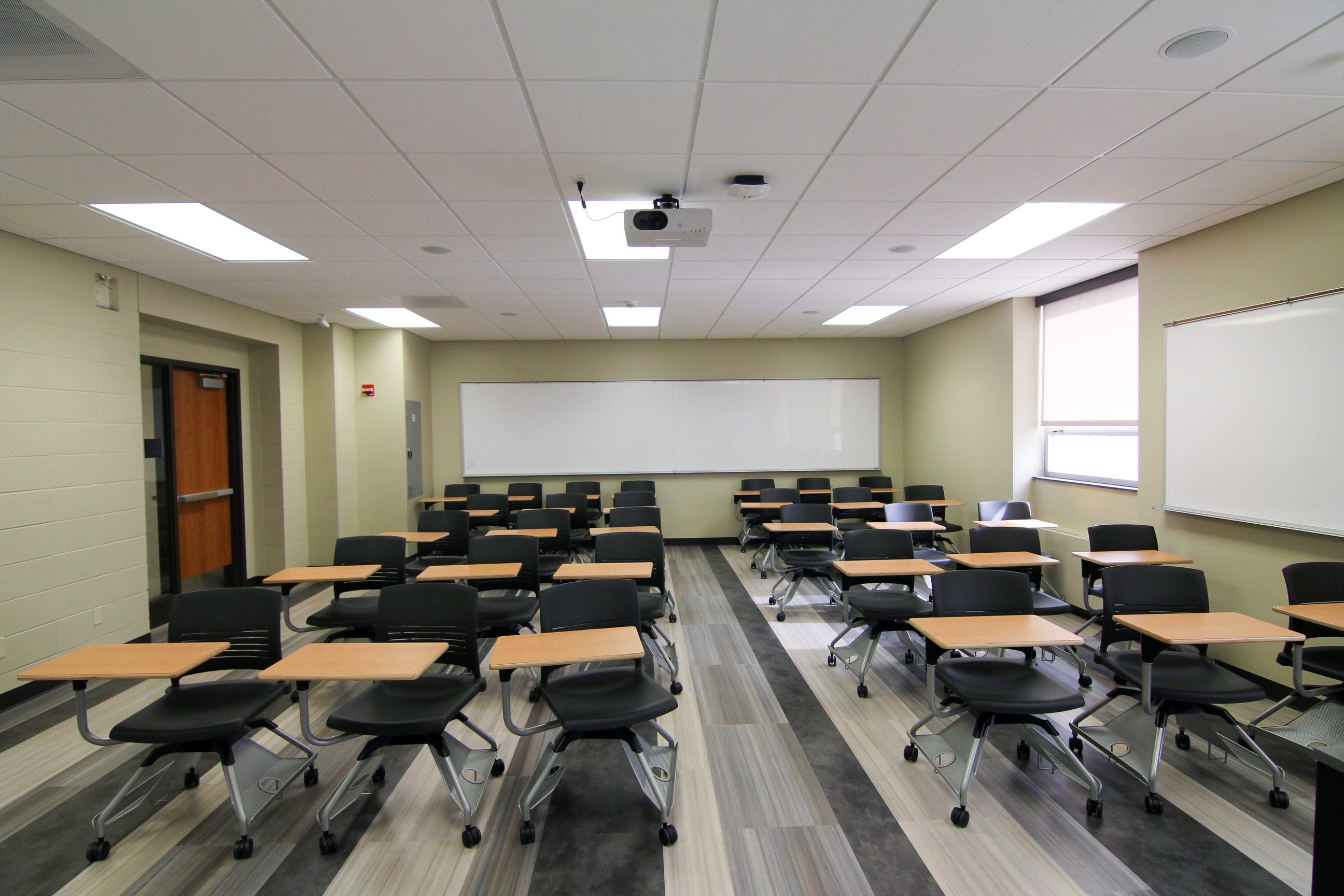
We try to reclaim the distinctness of the classroom by trying to declare it so. We write policies, we tell students to focus and put away the devices. We lament, “they simply don’t care.” The reason for this isn’t pure apathy or malice. At least, I don’t think. We can’t make something special by fiat. It needs to feel that way. Maybe when it starts feeling that way no one will have to police phones and moan about the lack of engagement.
How do we make it feel that way?
The classroom should have different norms than the rest of mundane life.
In all transparency, I have not done the best job at this. I’m trying to think about the small ways my classroom needs to change to communicate that learning is a dignified experience and not something to slog through with only one ear open. But this is the most central and foundational aspect of making it feel different. To feel different, it needs to be different from what is experienced outside it. If that means setting aside technology at intentional times, so be it. If that means writing by hand, so be it. If that means reading from the most extravagant version of the text you can find, so be it (I will say there are some wonderfully beautiful copies of books that are surprisingly not cost prohibitive). The goal is for students to feel that learning is an elevated experience. Because it should be.

Focus on the shift.
I don’t know what I’ll be doing to accomplish this in the Fall. Thankfully, I don’t need to publish anything to this effect on my syllabus or make any grand declaration about it ahead of time. I might land on the perfect thing on my commute on the first day. What I do know is that I want to be intentional about encouraging students to shift from the mundane to a place of dignified learning. Maybe that includes a cell-phone ceremony in which everyone turns off their phones at the same time. Maybe it includes starting in silence and slowly taking out their moleskin to write down their reflections. Maybe it’s me just displaying my own copy of the text on a bookstand at the front of the room to focus students as they walk in. Maybe it’s a faint Peter Sandberg song playing for the first two minutes in silence. Maybe it is all of these things. Maybe. It will definitely be something.
The Frame.
This might overlap with the shift but I do feel it’s a distinct enough point to merit separate consideration. We need to make the purpose of learning explicit each time we meet. But here is the catch: it can’t come in the form of a long-winded speech on the purpose of learning and why students should take it seriously. It needs to be a subtle but visceral reminder of what is going on and the frame of mind we need to be in for it actually to go on well. As soon as I figure out what that will look like in my classroom, I’ll share. I haven’t landed on it yet.
In Conclusion
I’m running out of time to finish this. But what I hope you’ll take from this is the following:
Polices don’t create reverence; rituals do.
I won’t be bringing incense to my classroom—though that would be lovely. I will be making it feel different from life outside it.
I haven’t! But I’m now interested!
One author (link attached) put it as “scrubbing in” as one would in a surgery. His idea is that the work in the classroom has real consequences and so must be treated with care from the outset. Now, the conclusions the author draws are a little different - teaching students to use the correct technology in the correct way. I teach HS English at a 1:1 iPad school, but I run a 90/10 classroom with 90% being device free with paper and pen/pencil and 10% iPad. But the idea of scrubbing in to the classroom has captivated me. And now your article has got me thinking. I teach at a Christian school. It is a sacred thing to learn how to image God well. Thank you for writing and for teaching!
https://hedgehogreview.com/web-features/thr/posts/scrubbing-in